 Southern Wildlife Resources
Pesticide Application and Integrated Pest Management
Southern Wildlife Resources is a wildlife and pest management firm serving central Kentucky, led by a Ph.D. wildlife biologist and Certified Wildlife Biologist. We manage moles, ticks, mosquitoes, and nuisance wildlife on residential properties, commercial grounds, farms, and recreational land.
Our Approach
What separates us from a lawn spray route is not the equipment. It is that we evaluate the property first and then apply the method that our evaluation indicates is the best approach, which is not always the method the industry sells.
Integrated Pest Management
Integrated Pest Management, or IPM, is the framework professional pest management is built on. It is not a product and it is not a schedule. It is a decision process that runs in order: identify the species correctly, monitor the property to learn where the animal or insect is and how much of it is present, judge whether the damage justifies action, then select from the full set of tools rather than reaching first for the one that is easiest to sell.
The tools available to us on a given property include:
- Identification and monitoring. Confirming the species and mapping activity before anything is applied or set.
- Habitat and cultural modification. Irrigation practices, mowing height, leaf litter, mulch borders, drainage, container removal, and the placement of structures that concentrate pests or their hosts.
- Food source management. Reducing the prey base a pest is working, including soil invertebrate populations in turf.
- Exclusion. Physical barriers that keep an animal out of a structure, a bed, or a defined area.
- Direct removal. Trapping and physical capture, which is the tool that actually takes an animal off the property.
- Repellents. Registered repellent products where the evidence supports them and where moving an animal is an acceptable outcome.
- Toxicants and pesticide applications. Registered products applied by a licensed applicator, on label, at the point in the pest's biology when the application does something.
- Verification and follow-up. Returning to confirm the result and adjusting the program when the property changes.
No single tool solves a pest problem on its own. A program that uses several of them, sequenced against the pest's biology and the season, is what IPM means in practice.
Why These Are Maintenance Programs
Pest pressure is a condition of a property, not an event that happens once. Neighboring land, deer movement, soil moisture, rainfall, and the water and cover on adjoining parcels all keep supplying pressure regardless of what happened on your acreage last month. Remove a mole and the runway system it built remains, available to the next animal that disperses into it. Knock down a mosquito population and containers two lots over refill it. Clear ticks off the edge and deer walk more in.
That is why our services are structured as maintenance programs rather than one-time treatments. A program keeps the monitoring going, applies the right tool at the right point in the season, and catches the rebound before it becomes damage you can see. It also lets us spend your money on the tool that works in a given month instead of the same application twelve times a year.
Our Programs
Every program below is built the same way and stocked from the same toolbox. What changes is which tools carry the load and how often we are on the property, and that is driven by the biology of the pest, not by a billing preference.
| Program | Tools that carry the program | How it is sold |
|---|---|---|
| Mole damage management | Runway mapping, trapping, labeled toxicant baits, soil invertebrate management, irrigation and cultural adjustment, turf repair | By the job to resolution, or as an annual turn-key program with unlimited removals |
| Tick management | Property and host assessment, targeted acaricide on tick habitat, habitat modification, personal protection planning, tick submission | Led by a written assessment and plan, priced separately, with barrier application as one component |
| Mosquito management | Larval habitat inventory, source reduction, larvicide, targeted adulticide barrier applications, pollinator protection | Per application, repeated on a published efficacy interval rather than sold as a season price |
Tick and mosquito applications are billed at the same rate: $215 for a property up to 1 acre, plus $20 for each 0.1 acre, or portion thereof, above that.
Mole Damage Management
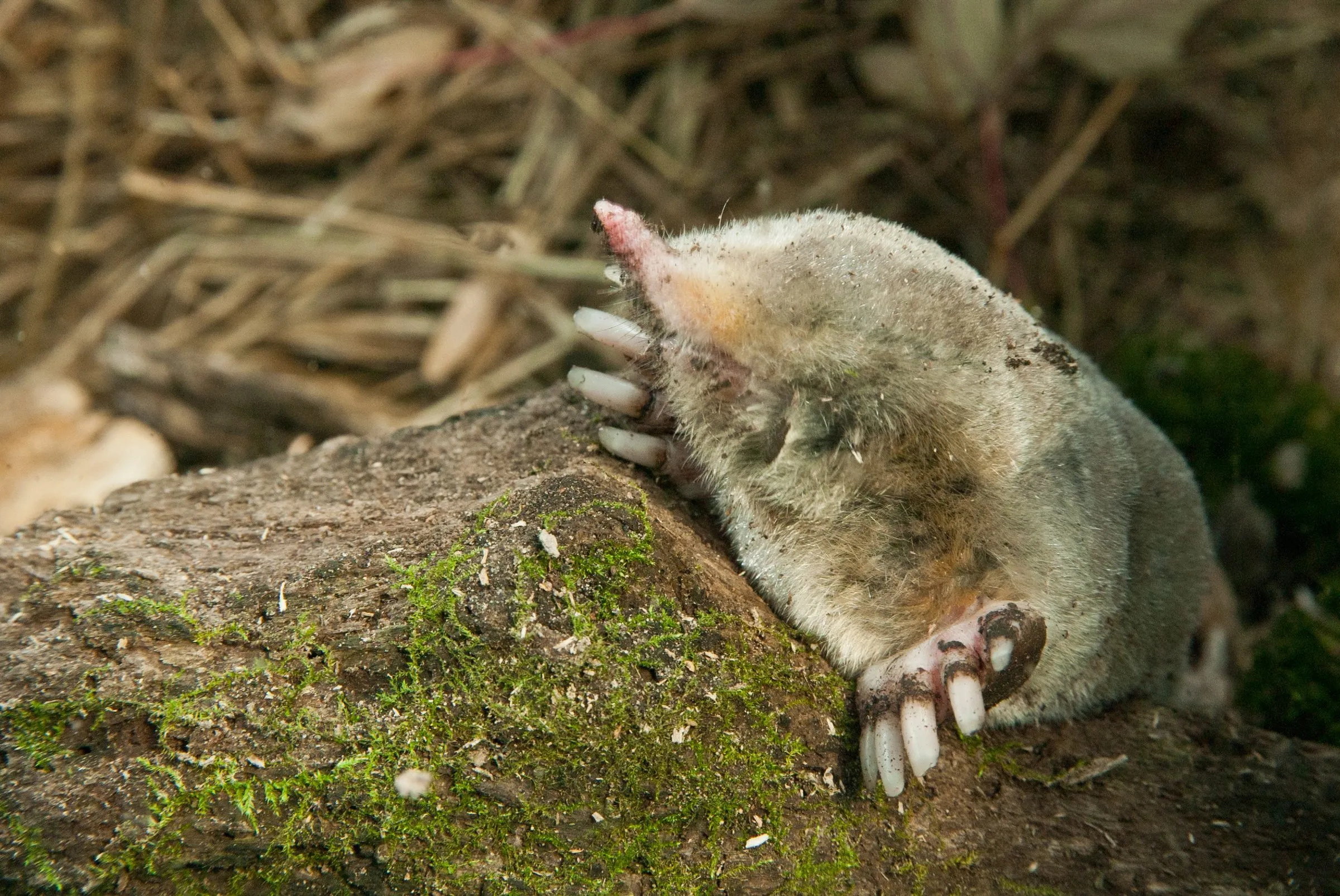
Surface runways, molehills, and browning turf along the tunnels.
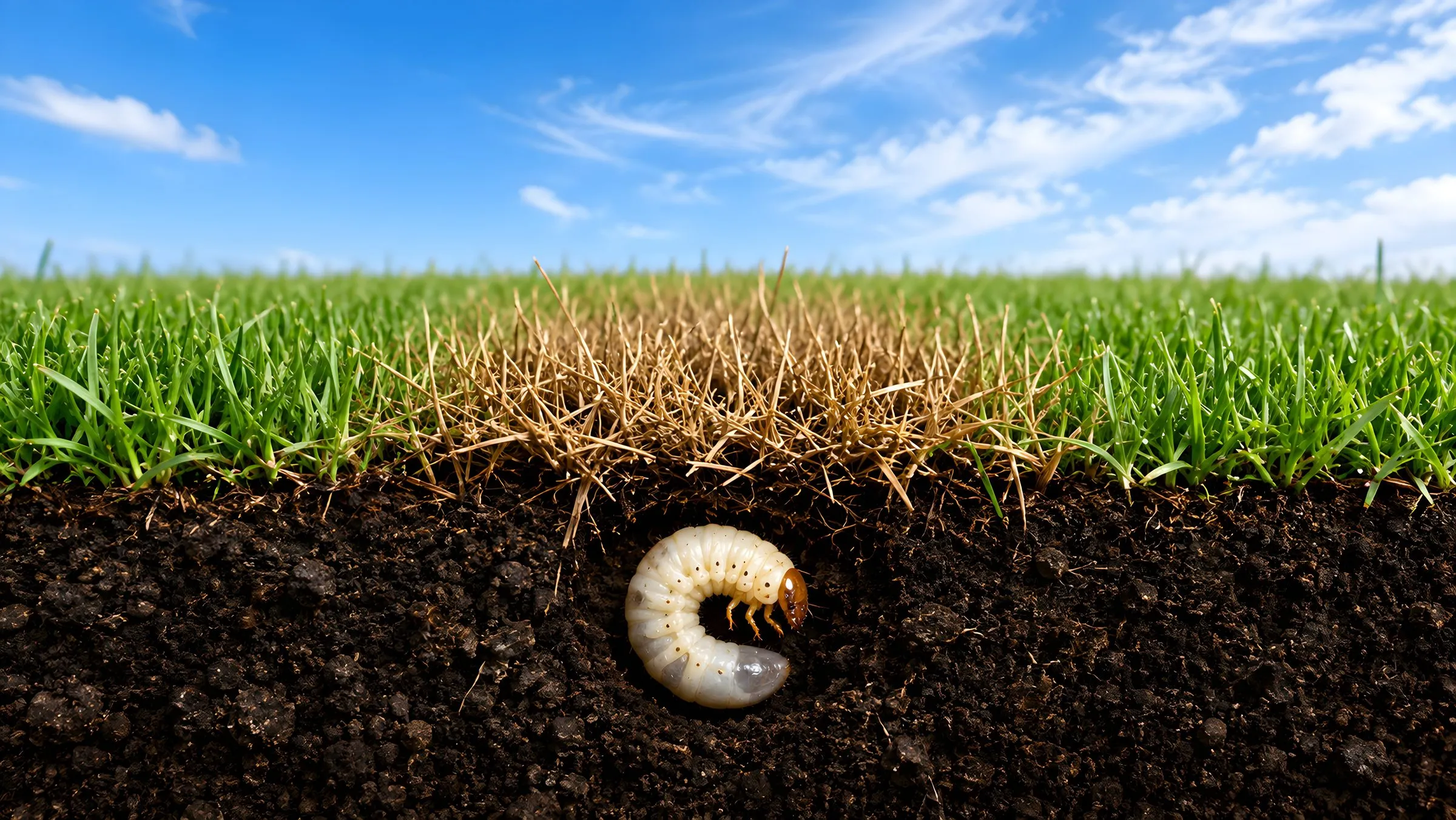
Moles are insectivores, more closely related to shrews than to rodents, and they eat constantly. Published intake figures run from 70 to 100 percent of body weight per day. In the stomach content data reported in the standard wildlife damage management handbook, white grubs were present in 64 of 100 eastern mole stomachs and earthworms in 49, with beetles and beetle larvae also heavily represented. Grubs are not incidental to a mole. They are one of its principal foods.
That is why the food base is part of the program and not an afterthought. The same handbook lists food source reduction as a cultural control method, reporting that reducing soil moisture and removing the food source with insecticides discourages moles and generally results in lower populations. It carries an important caution with it, and we pass that caution on: before moles leave an area, they may increase digging in search of food, so surface damage can worsen for a period before it improves.
Our program works both ends at once. We map the runways to learn which tunnels are active. Trapping and labeled toxicant baits take the animals that are on the property now, and trapping remains the most effective single control method for moles. Turf grub applications go down on the turf calendar to protect root systems, and on the treated acreage they reduce the seasonal soil invertebrate load. Irrigation practice is adjusted, because consistently wet turf holds prey near the surface and holds moles with it. Surface ridges are rolled or tamped so the grass recovers instead of dying along every run.
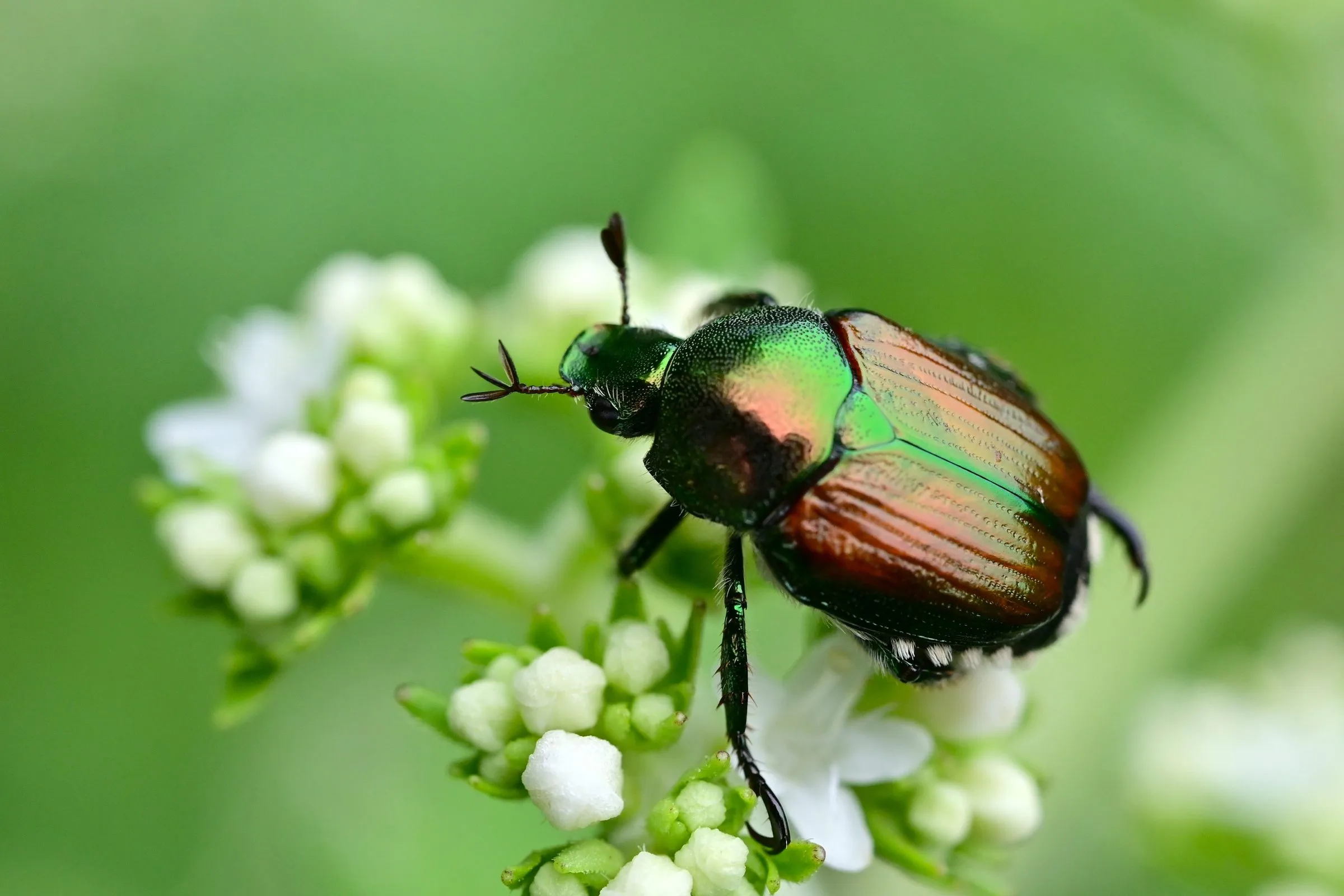
Mole pressure does not end when the last animal is caught. The runway system stays in the ground, adjoining properties keep producing dispersers, and good habitat refills. That is why this is offered both as a job to resolution and as an annual turn-key program with unlimited removals, activity-triggered visits, and one late-spring turf grub application.
Turf repair and site recommendations are included in both.
A stand-alone turf grub application is $215 per yard for properties up to 1 acre, plus $20 for each 0.1 acre, or portion thereof, above that, and is sold as turf protection, not mole control.
Read the full Mole Damage Management page, or see mole removal and Turn-Key Mole Program pricing on the price list.
Disease Vector Control: Ticks and Mosquitoes
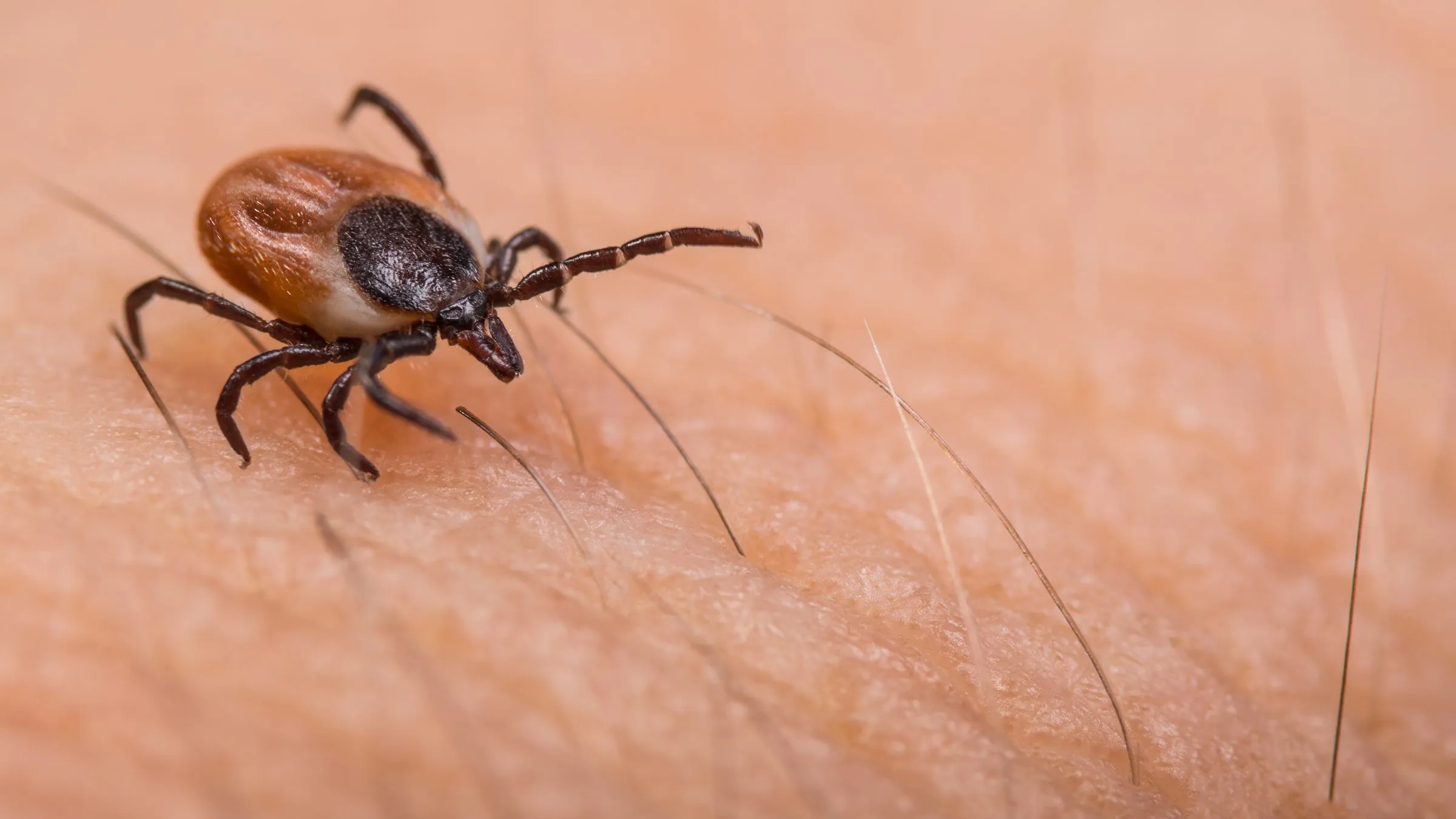
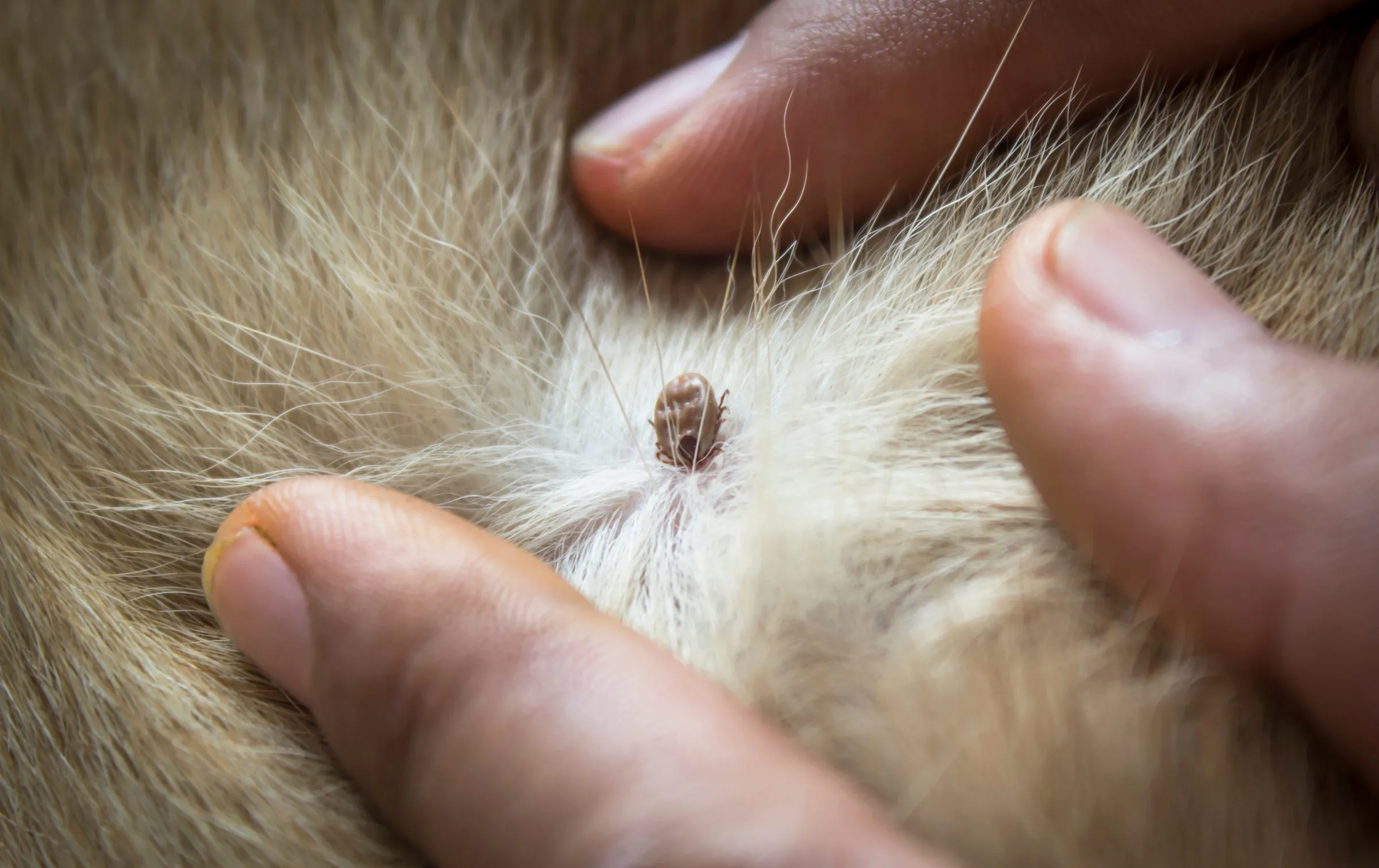
Ticks and mosquitoes are the two animals in Kentucky most likely to make a member of your household sick. Neither one is a disease. Each is a vector, an animal that carries a pathogen from a wild host to a person, and the way you lower your family's contact with those pathogens is to lower your family's contact with the animals carrying them. That is what this service does. We survey the property, identify where ticks and mosquitoes are actually living and resting, and apply a licensed barrier treatment to that habitat: woodland edges, leaf litter, tall grass, shaded foliage, under decks, and along fence lines. Fewer vectors where your family spends its time means fewer bites.
The vectors we manage carry the following diseases and conditions in Kentucky:
Carried by ticks
- Ehrlichiosis, transmitted by the lone star tick. Kentucky has some of the highest incidence rates in the nation.
- Rocky Mountain spotted fever, transmitted chiefly by the American dog tick. Can become severe when treatment is delayed.
- Lyme disease, transmitted by the blacklegged tick, which statewide surveillance has found to be far more widespread in Kentucky than previously documented.
- Anaplasmosis and babesiosis, also transmitted by the blacklegged tick.
- Spotted fever group rickettsiosis (Rickettsia parkeri), transmitted by the Gulf Coast tick.
- Tularemia, transmitted by the lone star tick and the American dog tick.
- Heartland virus and Bourbon virus, rare tick-borne viruses associated with the lone star tick. Neither has a vaccine or specific treatment.
- Alpha-gal syndrome, an allergy to mammalian meat triggered by the bite of the lone star tick. Kentucky has the highest average antibody levels of any state tested.
- Tick paralysis, associated with the American dog tick.
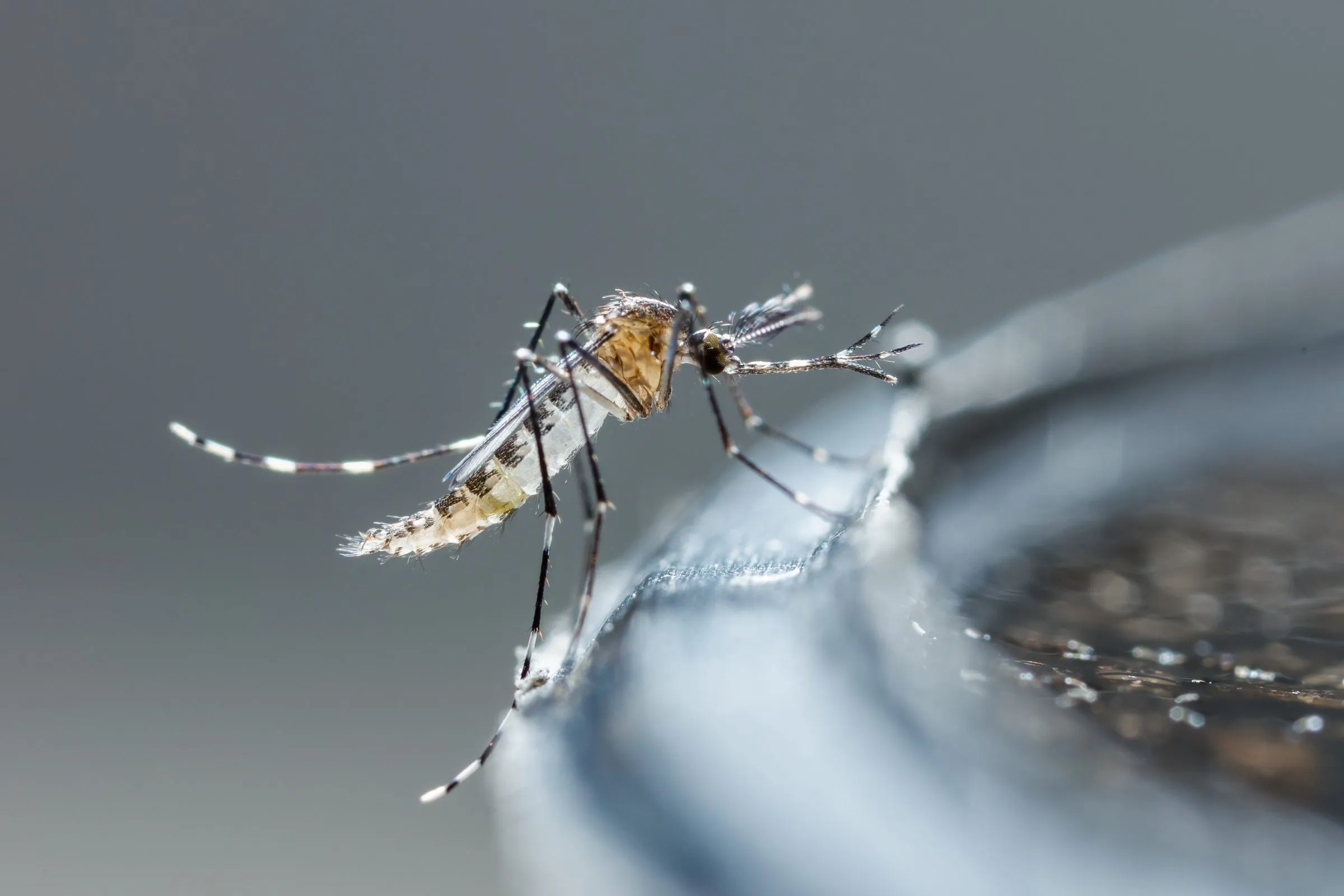
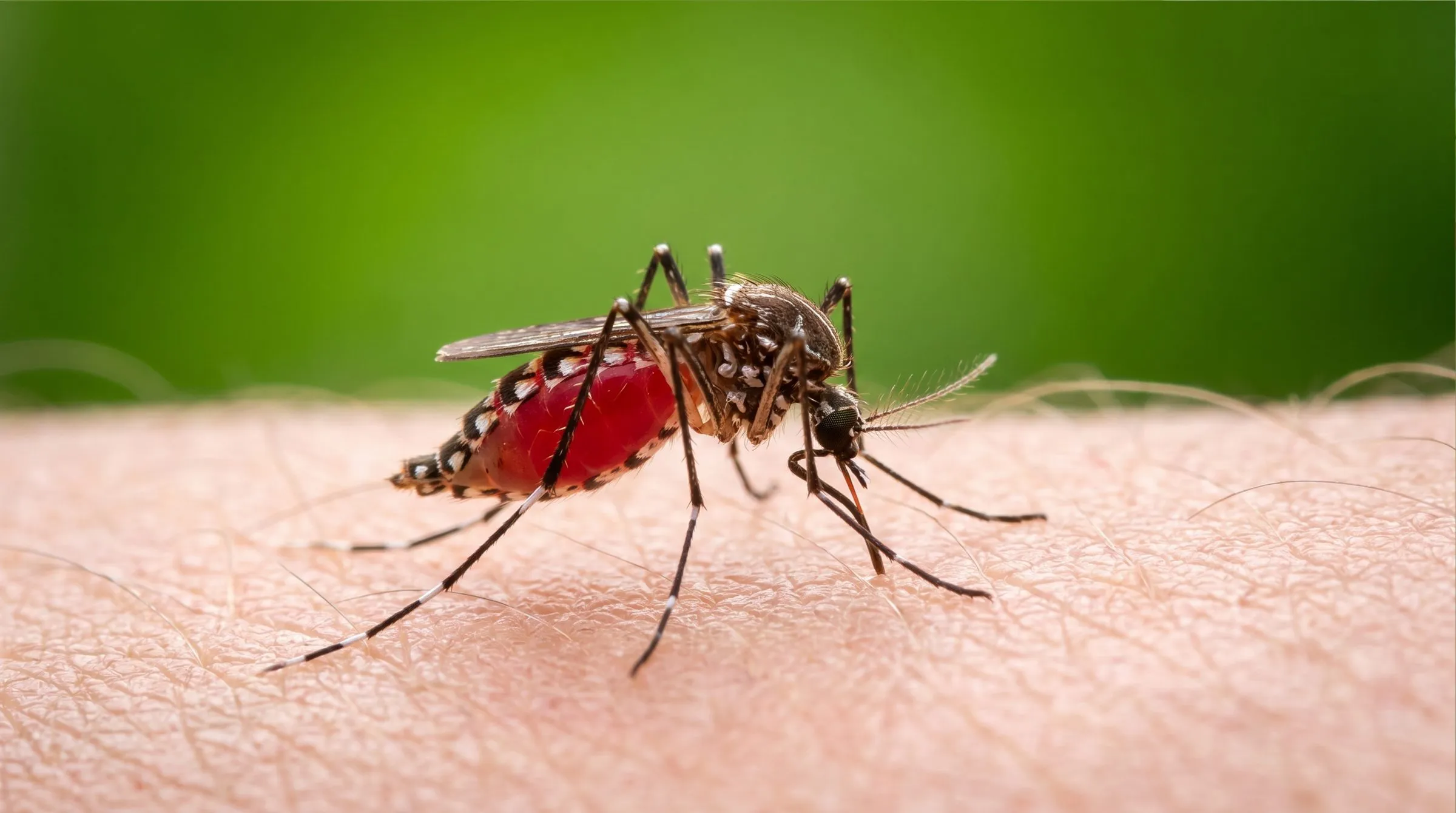
Carried by mosquitoes
- West Nile virus, carried by Culex house mosquitoes. In 2025 Kentucky recorded nineteen cases and one death against a prior-year average of seven. Fewer than one percent of infections become neuroinvasive, but roughly ten percent of those are fatal.
- La Crosse virus, carried by the eastern treehole mosquito. The most common cause of pediatric arboviral encephalitis in the United States, with severe disease occurring mainly in children under sixteen. Kentucky confirmed cases in eastern and central counties in 2025.
- Dengue and chikungunya, carried by the Asian tiger mosquito, the dominant daytime biter in Kentucky yards. Both have produced locally acquired cases in southern states in recent years. Kentucky cases to date have been travel-acquired.
Disease Vector Control (Ticks and Mosquitoes) is $215 per yard for properties up to 1 acre, plus $20 for each 0.1 acre, or portion thereof, above that, with no setup fee. The tick or mosquito assessment and written plan is $250, priced separately from application. See the Pesticide Application section of the price list.
Read the full Tick Management and Mosquito Management pages.
Why a Wildlife Biologist
Most pest control is chemistry applied on a schedule. Wildlife management is a different discipline. It asks which species is present, what it needs, what the habitat is providing, and what intervention will actually change the outcome. That question is the front half of IPM, and it is the half most companies skip.
Southern Wildlife Resources is led by a Ph.D. wildlife biologist and Certified Wildlife Biologist whose career spans state wildlife agency leadership, including eight years as Commissioner of the Kentucky Department of Fish and Wildlife Resources, and national conservation policy work. We evaluate the primary literature, we work these problems in the field every season, and we will tell you when the product you were about to buy will not solve your problem.
How We Work
- Site assessment. We walk the property and identify the species, the habitat driving it, and where it intersects how you actually use your land.
- Written plan. What we are treating, what we are using, when, and what result to expect. If part of the problem cannot be solved with a pesticide application, the plan says so.
- Execution by a licensed applicator, in accordance with the product label and Kentucky pesticide regulations.
- Monitoring and adjustment. We verify the result, and we change the tool when the season or the property changes.
Our Licensed Applicators
These members of our team hold pesticide applicator or dealer credentials:
- Jonathan Gassett, Ph.D.
- Robin Gassett
Reference Library
We publish plain-language reference guides on the species we manage. They are free, they are cited, and they will tell you honestly when a problem does not require hiring anyone. The mole entry is the standard reference chapter, linked at its publisher's record rather than copied here.
- Ticks of Kentucky and the Diseases They Carry (PDF, 8 pages). A Southern Wildlife Resources guide to the ticks of the Commonwealth, the pathogens and conditions they carry, and how to remove a tick and when to call a physician.
- Mosquitoes of Kentucky and the Diseases They Carry (PDF, 7 pages). A Southern Wildlife Resources guide to the mosquito groups that matter in Kentucky, where they breed, and the viruses they carry.
- Henderson, F. R. (1994). Moles. In S. E. Hygnstrom, R. M. Timm, and G. E. Larson (Eds.), Prevention and Control of Wildlife Damage (pp. D-51 to D-58). University of Nebraska-Lincoln. External link to the publisher's record: DigitalCommons@UNL, Internet Center for Wildlife Damage Management handbook, record 49. This chapter is not a Southern Wildlife Resources document and is not hosted on this site.
Service Area
Southern Wildlife Resources serves Central and Northern Kentucky, including Anderson, Boone, Bourbon, Boyle, Bracken, Campbell, Carroll, Clark, Fayette, Franklin, Gallatin, Grant, Harrison, Henry, Jefferson, Jessamine, Kenton, Madison, Mercer, Nicholas, Oldham, Owen, Pendleton, Robertson, Scott, Shelby, Spencer, Trimble, Washington, and Woodford counties. Get in touch to schedule an assessment.
Have a question about this service? See our Frequently Asked Questions or call us.